.png)
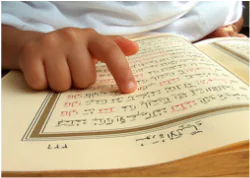
Course
Rahmani Qaidah
القاعدة الرحمانيةThe beloved classic of South Asian households — Arabic letters, sounds, and joining rules taught in the traditional Rahmani method by a live teacher.
Course overview
Rahmani Qaidah is the time-tested classic that generations of South Asian families have used to bring their children to the Quran. It teaches Arabic letters, harakat, tanween, sukoon, madd, and reading practice in a structured sequence rooted in traditional Islamic pedagogy. Students who complete it read the Quran with a calm, measured confidence that is the hallmark of this method. We teach it one-to-one with a qualified teacher, so every sound is corrected before it becomes a habit.
What we teach
- Recognise all 28 Arabic letters in their isolated and joined forms
- Produce each letter from its correct articulation point (makhraj)
- Read letters carrying harakat, sukoon, tanween, and madd correctly
- Join letters into words and short Quranic phrases without spelling them out
- Build the habit of daily reading practice
What your student walks away with
- Reads any fully-voweled Arabic text slowly but correctly
- Knows the difference between similar-sounding letters (س/ص، ت/ط، ه/ح)
- Is ready to move into the Quran Reading (Nazra) course
Curriculum at a glance
| Section 1 | Single letters — names, shapes, and correct sounds |
|---|---|
| Section 2 | Joined letters and letter positions in a word |
| Section 3 | Harakat — fatha, kasra, and damma |
| Section 4 | Tanween, sukoon, and shaddah |
| Section 5 | Madd letters and their stretching rules |
| Section 6 | Reading practice on short surahs from Juz Amma |
The Rahmani tradition
The Rahmani Qaidah carries the quiet authority of a text that has been refined through generations of use in traditional maktabs and families across the subcontinent. It does not rush. Every section is arranged so that the student can master one thing fully before the next is introduced — and the teacher is beside them at every step, listening for the exact sounds that must come from the right place in the mouth or throat.
How do the classes actually run?
Every class is one-to-one: your child and their teacher, live on Zoom or Google Meet. A typical 30-minute class looks like this:
- 5 minutes — revision of the previous section. The teacher listens, corrects, and decides whether to move on.
- 15 minutes — the new section. The teacher reads, the student repeats, and the teacher corrects the articulation of each letter on the spot.
- 10 minutes — mixed practice, so old material is not forgotten.
After class, the teacher sends a short homework note on WhatsApp — usually one line to read aloud twice a day. Ten minutes of daily practice at home matters more than any single class.
What should you expect?
Early weeks are letters and sounds. Progress feels slow and that is deliberate — letters like ع، ح، ق and ط do not exist in English, and fixing them early is far easier than unlearning bad habits later.
Middle weeks introduce harakat, tanween, and sukoon. This is where reading actually begins: two-letter words, then three, then full lines.
Final weeks cover madd, shaddah, and reading practice on short surahs from Juz Amma. Hearing themselves read a surah they have prayed with for years is usually the moment students light up.
What happens after the Rahmani Qaidah?
Students move directly into our Quran Reading (Nazra) course with the same teacher wherever possible. By then the hard part is done — the Qaida is the steepest part of the whole journey, and everything after it feels like the reward for all that careful work.
Questions parents ask about this course
What is the difference between Rahmani Qaidah and Noorani Qaidah?
Both teach the same letters and reading rules. Rahmani Qaidah follows the classic South Asian format that many traditional families and teachers prefer. Noorani Qaidah has a more modern colourful layout used widely in Western countries. Both are equally effective — the best one is usually whichever the teacher is most fluent in.
My child is 4 — is that too young?
Four is fine for most children, though we shorten the first classes to 20 minutes and use more repetition and games. If a child is not ready, the teacher will tell you honestly after the trial week.
How long until my child can read the Quran?
A child attending 4–5 classes a week typically finishes the Qaida in 3 to 4 months. Two classes a week stretches it to about 6 months.
Do adults take this course?
Yes. Many adult students want to rebuild their Arabic reading foundation properly. The lessons are the same; the pace is usually faster.
You may also like
Noorani Qaida (Interactive)
القاعدة النورانيةThe fundamental stepping stone for every Quran reader. Master Arabic Harfs (letters), Tajweed rules, and progress to reciting Quranic Ayahs using our highly optimized interactive learning platform.
4 years and up · 3–6 months
Quran Reading (Nazra)
ناظرة القرآنRead the entire Quran from cover to cover with a live teacher correcting every line — fluency first, speed later.
5 years and up · 12–24 months for a full recitation
Islamic Studies for Kids
التربية الإسلامية للأطفالSalah, wudu, daily duas, the life of the Prophet ﷺ, and good character — taught at a child's pace, with stories they will actually remember.
5–13 years · Ongoing; structured in yearly levels