
qaida
The Noorani Qaida, Stage by Stage: What Your Child Learns and When
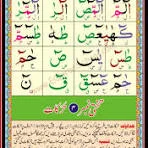
Parents often tell us they can see their child is "on page nine" of the Noorani Qaida but have no idea what page nine is for. That is a fair complaint. The Qaida is a carefully ordered book, and each stage exists because the next one depends on it. Knowing the order makes it much easier to support your child — and to recognise when a stage needs a little more time.
Below is the path as we teach it in our Noorani Qaida course. The time ranges assume four to five 30-minute classes a week with ten minutes of daily practice. With fewer classes, everything stretches; that is normal.
What happens in the first stage — the single letters?
The Qaida opens with the individual Arabic letters (huroof mufradat). Your child learns each letter's shape, its name, and — most importantly — where in the mouth or throat its sound comes from. These points of articulation are called makharij.
This is the stage that decides how well your child will read later. Letters such as ع, ح, ق and ص have no close English equivalent, and the teacher will repeat them patiently until the sound is right, not just close. Children also start to notice that some letters are pronounced heavy, with a full mouth, and others light.
Roughly: three to four weeks.
How does the child learn letters that join together?
Next come the compound letters (huroof murakkabat). Arabic letters change shape depending on whether they sit at the start, middle or end of a word, and this stage teaches a child to recognise a letter even when half of it seems to have disappeared into its neighbour.
The same section usually includes the disjoined letters (huroof muqatta'at) — letter combinations such as Alif Lam Meem that open certain surahs and are read by their letter names. Children often enjoy this part because they start spotting these letters in their own mushaf.
Roughly: about two weeks.
When are the vowel marks introduced?
The harakat are the short vowel marks: fatha (zabar), kasra (zer) and damma (pesh). With these, letters stop being names and start being sounds — ba, bi, bu. Your child begins reading short syllables and then two- and three-letter combinations.
The teacher listens closely for vowels that drift, a common habit for children who speak English at home.
Roughly: two weeks.
What is tanween?
Tanween is the doubled vowel mark at the end of a word, which adds a noon sound: -an, -in, -un. It is a short stage, but it introduces the idea that a small mark can change the end of a word, which matters a great deal once your child reaches real ayat.
Roughly: one to two weeks.
What are the standing harakat and madd letters?
This stage teaches length. The standing (vertical) fatha, the standing kasra and the inverted damma lengthen a vowel. Then come the madd letters — alif, waw and ya in particular positions — which stretch the sound before it, and the leen letters, which are read softly.
The usual length taught here is two counts. Children who rush will shorten these, so the teacher often has them tap a finger as they read. If your child comes back from class tapping the table, this is why.
Roughly: about two weeks.
What do sukoon and shaddah teach?
The sukoon (jazm) marks a letter with no vowel, so it joins to the letter before it. This is where reading starts to sound like words rather than syllables. Many Qaida editions also introduce qalqalah here — the slight echo on five letters when they carry a sukoon.
The shaddah (tashdeed) doubles a letter: it is read once with a sukoon and once with its vowel. Shaddah combined with other marks is where many children slow down, and that is expected. We would rather spend an extra week here than move on with guessing.
Roughly: three to four weeks for both together.
When does my child start reading actual ayat?
The final pages of the Qaida bring everything together in words and short phrases taken from the Quran. The teacher now listens for all of the earlier stages at once — makharij, vowels, length, sukoon and shaddah — and starts building a steady pace.
When a child can read these pages smoothly without guessing, they are ready to move into Quran reading. In our course the Qaida closes with the Six Kalimas and everyday duas.
Roughly: two to three weeks, sometimes longer if the earlier stages need revisiting.
What can parents practise at home?
You do not need to read Arabic to help. What works for the families we teach:
- Same time, every day, ten minutes. Routine matters more than length. Before school or straight after dinner both work.
- Sit nearby. You do not have to correct anything. Being there tells your child this matters.
- Ask your child to teach you. "What is this mark called?" turns revision into something they enjoy, and it shows you quickly whether a stage has really settled.
- Use the teacher's notes. Our teachers send a short weekly update on WhatsApp — which lesson, which letters need work. Practise those, not the whole book.
- Don't push ahead. Reading the next page before class feels helpful, but it often means the child learns a mistake before the teacher hears it.
If something sounds wrong to you but you are not sure, note the page and mention it to the teacher rather than correcting it yourself.
Where to start
Every new student begins with a 3-day free trial, where the teacher checks your child's level and recommends the right starting point in the Qaida. You can book a free Noorani Qaida trial class or message us on WhatsApp at 0344 9996296.
Common questions
- How long does the whole Noorani Qaida take?
- With four to five classes a week and ten minutes of daily practice, most children finish in three to four months. With two classes a week it is closer to six. Adults are usually faster.
- Can my child skip ahead if they already know the letters?
- The teacher checks this in the trial. Children who genuinely recognise and pronounce the letters correctly move quickly through the early lessons, but we do not skip a stage that is not yet secure.
- I cannot read Arabic myself. Can I still help with practice?
- Yes. Your job at home is the routine — ten minutes at the same time each day, sitting nearby, and replaying anything the teacher has recorded. Correction is the teacher's job.